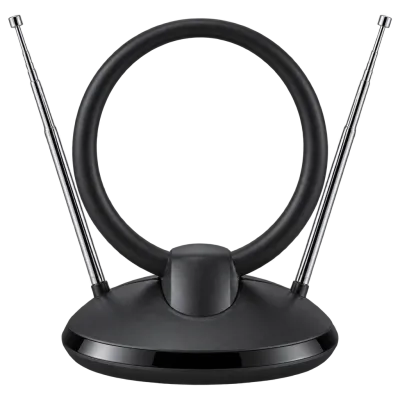
A TV tuner is the hardware inside a television, or a separate receiver box, that receives broadcast signals and converts them into a picture and sound. Depending on the reception method, a tuner supports one or more of the main digital broadcast standards: DVB-T2 for terrestrial antenna reception, DVB-S2 for satellite, and DVB-C for cable.
Many current televisions include two or even three tuner types built in, letting the same set switch between antenna, satellite and cable sources without extra hardware, though budget models sometimes include only one. Since broadcasts increasingly use HEVC compression, particularly for HD and 4K channels, checking that a tuner explicitly supports HEVC matters as much as checking the broadcast standard itself.
Anyone relying purely on streaming services with no broadcast television at all can, in principle, do without a tuner, but most households still keep at least one type as a backup or for local channels. See our guide to antenna and reception for how to choose the right combination.