
6 min read
TV antenna and reception explained
Antenna, satellite dish, cable or an internet connection: TV reception works differently depending on where you live and what infrastructure you use.
Getting live television channels onto a screen can mean several different things depending on where you live: an aerial on the roof, a satellite dish, a cable connection, or simply an app streaming over the internet. Each method uses different standards, and the details vary considerably from one country to another.
This guide explains the main reception methods used across Europe and beyond, and what to check before assuming a television will simply work with your local signal.
01
Terrestrial reception: DVB-T2
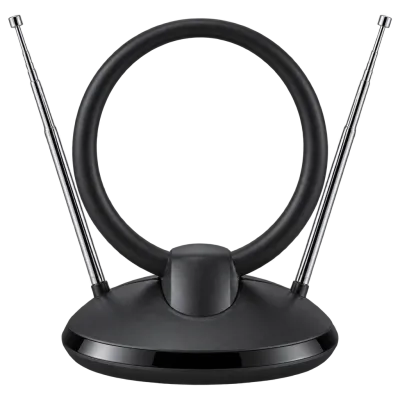
Terrestrial television is broadcast from local transmitter masts and received with an aerial, either an outdoor rooftop antenna or a smaller indoor or attic unit. The current European digital terrestrial standard is DVB-T2, the successor to the older DVB-T standard used through the 2000s and 2010s.
DVB-T2 is not identical everywhere it is used. In Germany, for instance, terrestrial broadcasts use the HEVC (H.265) video codec, which means a television or receiver box needs explicit DVB-T2 HD with HEVC support to decode the channels, not just generic DVB-T2 support. Other countries have made different choices of video codec and channel line up within the DVB-T2 framework, so a device bought for one country may not automatically receive terrestrial channels correctly in another.
 Matching productDVB-T2 antennaAmazon →
02
Satellite reception: DVB-S2
Satellite television, received via a dish pointed at a broadcast satellite, uses the DVB-S2 standard across most of Europe, having succeeded the older DVB-S standard. Satellite reception can cover a very wide geographic area from a single satellite, which is one reason it remains popular in regions with limited terrestrial or cable infrastructure, as well as for expatriate audiences wanting channels from their home country.
A satellite dish needs an unobstructed line of sight towards the relevant satellite position, which is why installation position and alignment matter, and why dense urban surroundings or particular building orientations can make satellite reception impractical for some households.
 Matching productTV standAmazon →
03
Cable reception: DVB-C
Cable television delivers channels through a coaxial cable network, typically the same infrastructure used for wired broadband internet in many regions. The relevant digital standard is DVB-C. Cable reception avoids the need for an aerial or dish entirely, but it depends on a cable connection being available at the property and usually involves a subscription with a local network operator.
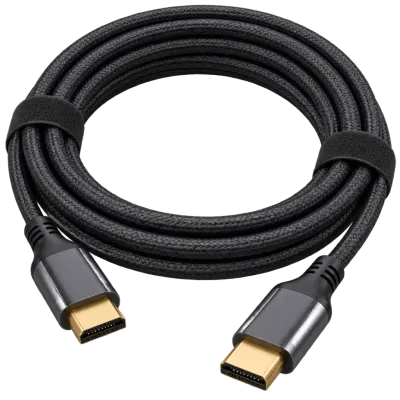 Matching productUltra High Speed HDMI cableAmazon →
04
IPTV and streaming
IPTV delivers television channels over an internet connection rather than through a dedicated broadcast signal, either as a managed service from an internet provider, bundled with a broadband connection, or through general streaming apps built into a smart TV. Because it relies on internet bandwidth rather than a broadcast standard, reception quality depends on connection speed and stability rather than aerial position or signal strength in the traditional sense.
Many broadcasters also offer their channels and catch up content through standalone apps or, in parts of Europe, through HbbTV, an interactive layer that adds on demand content and extra information to a standard broadcast signal. See our guide to smart TV platforms for more on how these apps and services are organised on a modern television.
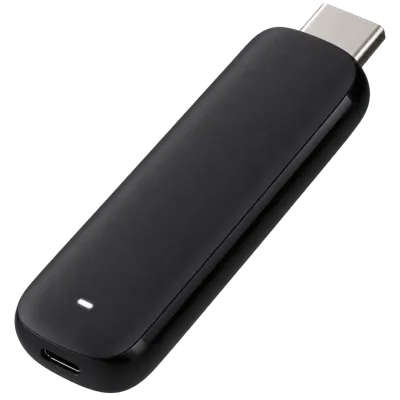 Matching product4K streaming stickAmazon →
05
The role of a CI+ module
| Reception type | Typical standard in Europe | What you usually need |
|---|---|---|
| Terrestrial (aerial) | DVB-T2 | Indoor or roof antenna, built-in or external tuner matching the local codec |
| Satellite | DVB-S2 | Satellite dish with clear line of sight, satellite tuner |
| Cable | DVB-C | Coaxial connection to the local cable network, cable tuner |
| Internet | IPTV / streaming apps | Sufficiently fast and stable internet connection |
Some pay television services, across terrestrial, satellite or cable, are encrypted and require a CI+ slot, a card style module that plugs into the television and works together with a smart card supplied by the broadcaster or operator to descramble subscribed channels. A CI+ slot is a standard feature on many televisions sold in Europe, but not universal, so it is worth checking if you plan to use one of these services without a separate set top box.
Most televisions sold for the European market include at least a DVB-T2 and DVB-S2 tuner as standard, with DVB-C support also common, though this varies by model and region. If you plan to rely on terrestrial or satellite reception directly through the television rather than through a separate set top box, it is worth checking which tuners, and which specific codec support, are included before buying, especially if you are importing a television from a different country or region.
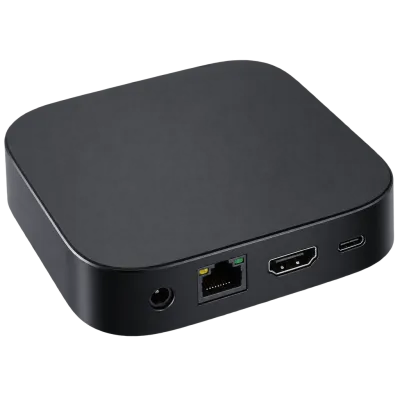 Matching productStreaming boxAmazon →
06
Indoor versus roof antennas
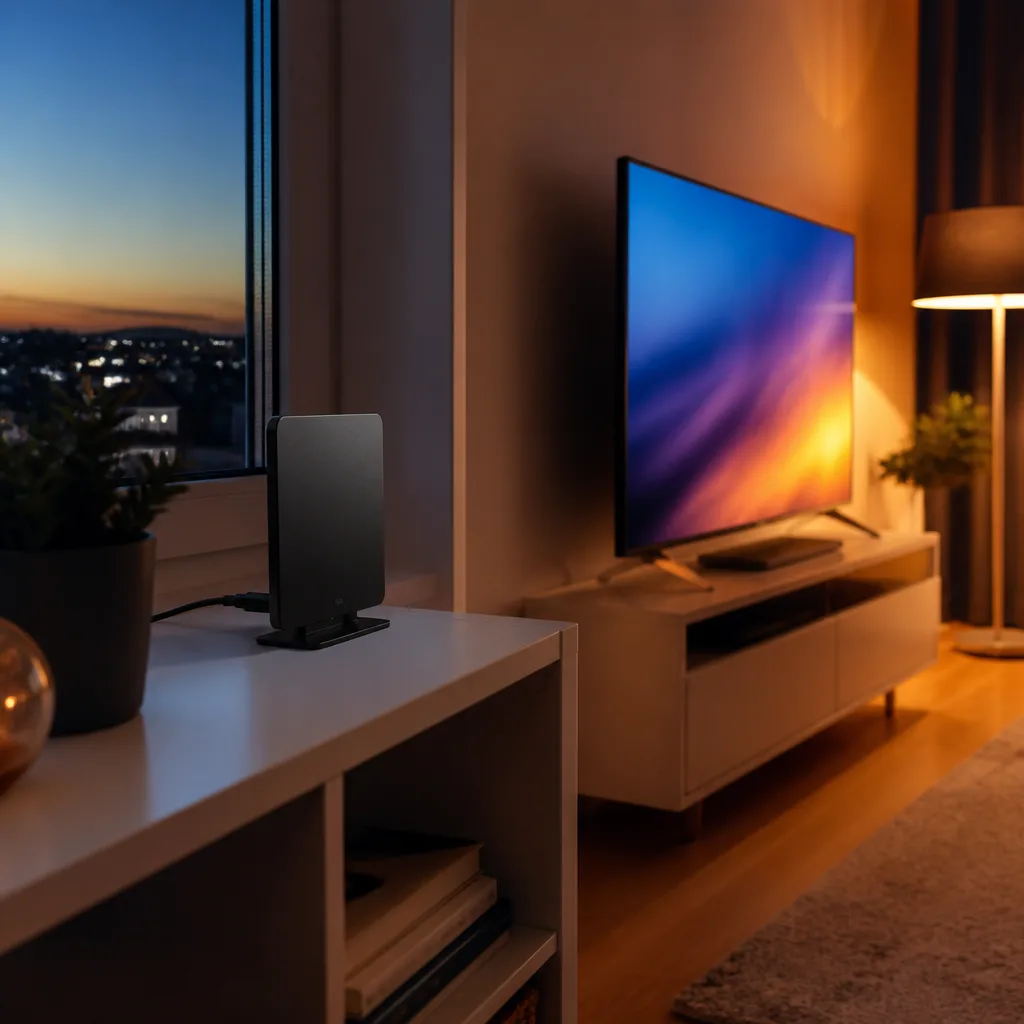
An indoor antenna is simple to install and works well for households reasonably close to a transmitter mast with few obstructions in between. A roof mounted antenna, positioned higher up and outdoors, generally receives a stronger and more consistent signal, which matters more for households further from a transmitter, in areas with hills or tall buildings nearby, or for buildings with a lot of dense construction material that can attenuate signal indoors.
For a household in a strong signal area, an indoor antenna is often perfectly adequate and considerably easier to install. For a marginal signal area, a roof antenna, or at least a well positioned window mounted one, usually gives a noticeably more reliable result, with fewer dropouts during poor weather.
07
Common signal problems
Weak or unstable terrestrial reception often traces back to a few common causes: distance from the transmitter, obstructions such as hills or large buildings, an antenna positioned indoors when a stronger signal is needed, or interference from other electronic devices near the antenna cable. For satellite reception, the most common problem is a dish that has drifted slightly out of alignment, for example after strong wind, or new obstructions such as growing trees or a new building blocking the line of sight.
For cable and IPTV, reception problems are usually connectivity issues rather than signal strength in the broadcast sense, so checking the cable connection, router or provided set top box is the more useful first step.
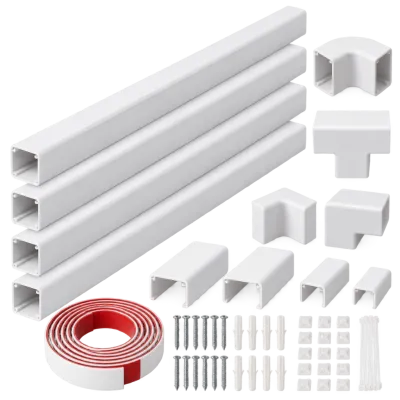 Matching productCable management kitAmazon →
08
Country differences in practice
Because reception standards, video codecs, channel arrangements and even which method dominates locally all vary by country, moving a television between countries can mean losing access to terrestrial channels entirely, even where both countries nominally use DVB-T2, if the codec or regional channel plan differs. Satellite reception is generally more consistent across borders for a given satellite position, since the receiving equipment mainly needs to match the broadcast standard and frequency band rather than a local terrestrial plan, though the specific channels available still depend on broadcasting rights and regional packages. Anyone moving house internationally, or bringing a television from abroad, should check local reception standards before assuming existing equipment will work as expected.
09
Frequently asked questions
Will a television bought in one country work with terrestrial TV in another?
Not necessarily. Codec support and channel arrangements for DVB-T2 differ between countries, so a television without the right tuner and codec support may not receive local terrestrial channels correctly, even though the broadcast is technically DVB-T2.
Do I need a satellite dish if I already have cable or IPTV?
No, these are alternative delivery methods for largely the same kind of content. Which one makes sense depends on what infrastructure is available at your property and what channels or services you want.
What is a CI+ module for?
A CI+ module, combined with a smart card from a broadcaster or operator, lets a television decrypt certain subscription channels directly, without needing a separate set top box.
Why does my satellite reception get worse in bad weather?
Heavy rain or snow can weaken a satellite signal, an effect sometimes called rain fade. A dish that is well aligned and appropriately sized for the local signal strength is usually more resilient to this than one on the margin of adequate signal.
Explore
Read next
 TV Panel Types Explained: LCD, QLED, Mini-LED, OLED and MoreAn overview of TV panel technologies, from LCD and QLED to OLED and Micro-LED, compared on blacks, brightness, viewing angle and burn-in ri…
 TV Buying Guide: How to Choose the Right TelevisionA practical, step by step guide that walks you through every decision in buying a television, from screen size to sound.
 TV Size Guide: Screen Sizes and Viewing DistanceA practical guide to translating screen diagonal into real dimensions and choosing the right size for your viewing distance and room.