
6 min read
TV Panel Types Explained: LCD, QLED, Mini-LED, OLED and More
An overview of TV panel technologies, from LCD and QLED to OLED and Micro-LED, compared on blacks, brightness, viewing angle and burn-in risk.
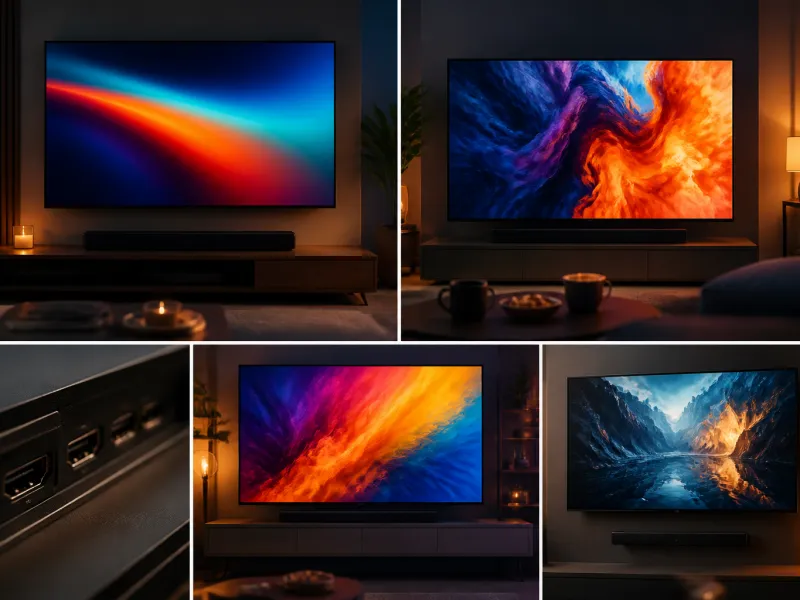
Walk into any TV aisle today and you will see terms such as QLED, OLED, Mini-LED and Micro-LED printed across boxes that otherwise look almost identical from a few metres away. These names describe genuinely different ways of putting an image on a screen, and the differences affect picture quality, viewing angle and long term durability in ways worth understanding before you buy.
This overview explains how each panel type works in plain language, and compares them on the points that matter most in everyday use: how deep the blacks look, how bright the screen can get, how the picture holds up when viewed from the side, and the risk of a fixed image marking the panel over time. We leave out prices and specific brands entirely, since both change constantly and neither tells you how a technology actually behaves.
01
How LCD televisions work: LED backlight
Most televisions sold today are LCD televisions, short for liquid crystal display. An LCD panel does not produce its own light. Instead, a layer of liquid crystal material sits in front of a backlight and twists to let more or less light through at each point on the screen, while a layer of colour filters turns that light into red, green and blue. Nearly all modern LCD televisions use LED backlight, meaning small light emitting diodes rather than the older fluorescent tubes, which made screens thinner and more efficient. On its own, the term LED TV simply describes this backlight and says nothing about how the backlight is arranged, which is the more important question for picture quality.
 Matching productProjector screenAmazon →
02
Edge-lit and full-array Mini-LED backlighting
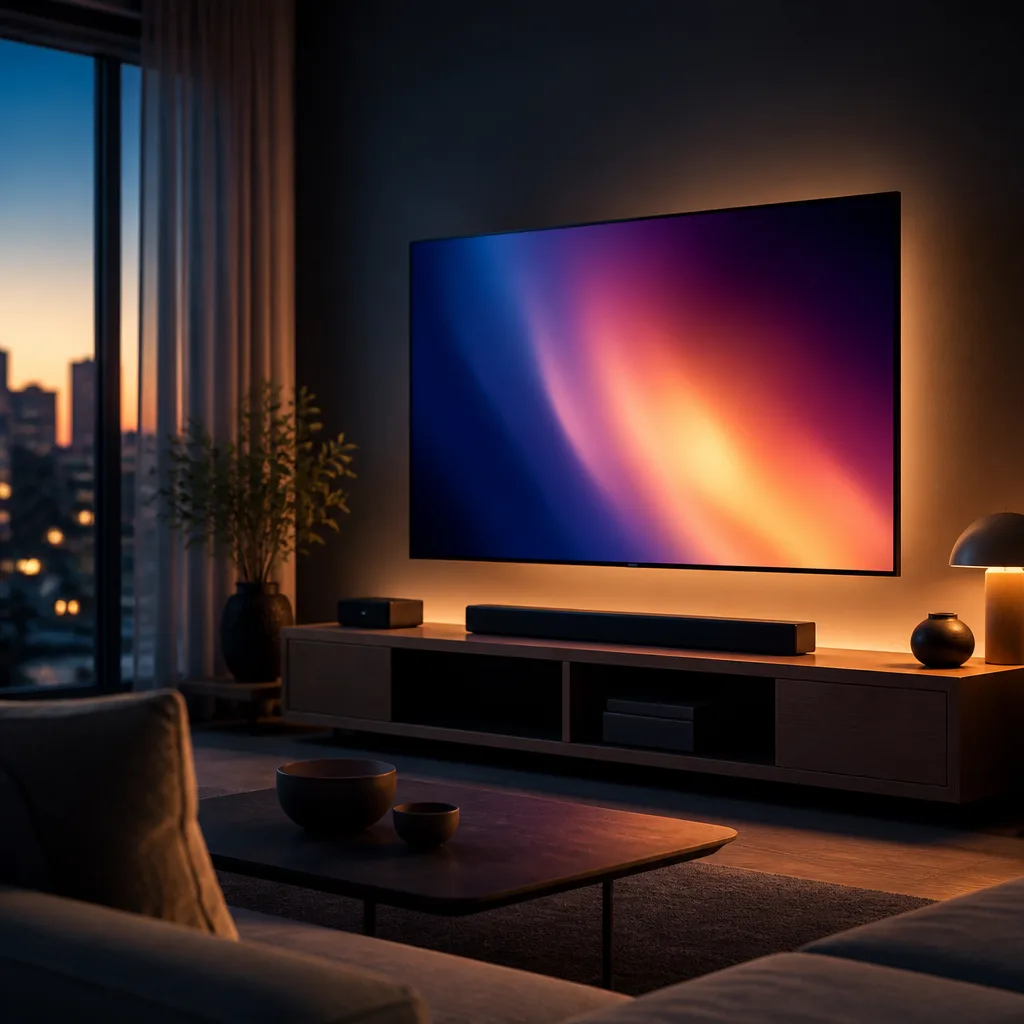
How the backlight is arranged behind the panel makes a large difference. An edge-lit television places LEDs along the top, bottom or sides of the screen, and spreads that light across the whole panel using a light guide, which allows for a very thin design but makes it hard to dim one area of the picture without dimming its neighbours too. A full-array backlight instead places LEDs directly behind the whole screen, arranged in zones that can be dimmed independently, a technique called local dimming, which lets dark parts of an image stay darker while bright parts stay bright.
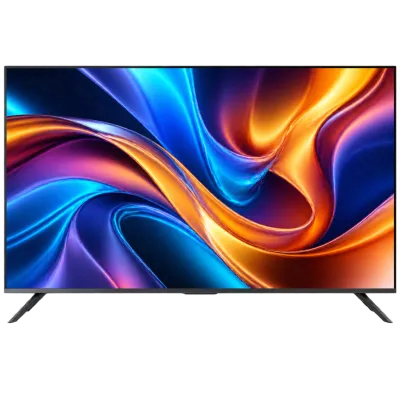
Mini-LED takes full-array local dimming further by using LEDs that are much smaller than earlier generations, which allows thousands of dimming zones instead of a few dozen. More zones generally mean less of the halo effect that appears around bright objects on a dark background, though a Mini-LED backlight still sits behind a conventional liquid crystal layer and works within the same basic limits as any other LCD panel.
 Matching productMini-LED TV 65 inchAmazon →
03
QLED: LCD with a quantum dot layer
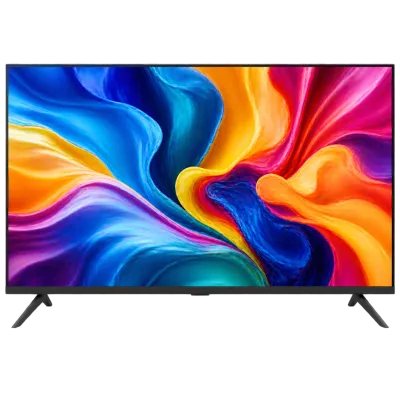
QLED televisions are LCD televisions with an added layer of quantum dots, extremely small particles that convert backlight into a purer, wider range of colours than colour filters alone can achieve. A QLED television can use either an edge-lit or a full-array Mini-LED backlight behind that quantum dot layer, so the term QLED on its own describes the colour layer, not the backlight arrangement or the number of dimming zones, both of which still need checking separately.
 Matching productQLED TV 55 inchAmazon →
04
OLED, WRGB OLED and QD-OLED
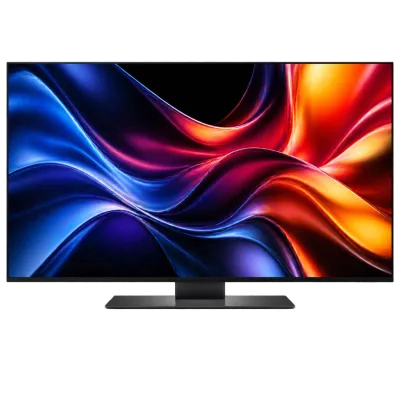
OLED, short for organic light emitting diode, works on a different principle entirely. Each pixel produces its own light and can be switched fully off, so there is no separate backlight to manage. This gives OLED televisions extremely deep blacks and a very wide viewing angle, since neighbouring pixels do not spill light into a dark area the way a backlight zone can. The most common consumer variant is WRGB OLED, which adds a white subpixel alongside red, green and blue to boost overall brightness. A newer variant called QD-OLED instead places a layer of quantum dots in front of a blue OLED layer to generate colour, and such panels are currently produced by a single panel manufacturer rather than several.
Because each OLED pixel ages individually with use, OLED panels carry a risk of burn-in, meaning a faint, permanent trace of a static image such as a channel logo or a game's heads up display. Modern OLED panels include several measures that reduce this risk considerably compared with early models, such as subtle pixel shifting and automatic brightness limiting for static content, but the risk is reduced, not eliminated, which matters mainly for viewing patterns with long stretches of the same fixed graphics on screen.
 Matching productOLED TV 55 inchAmazon →
05
Micro-LED: a self-emissive alternative
Micro-LED is a newer, self-emissive technology built from very small inorganic LEDs, one for each subpixel, rather than the organic compounds used in OLED. Like OLED, each pixel produces its own light and can switch off completely, giving similarly deep blacks and wide viewing angles, without the same ageing mechanism that leads to burn-in on OLED. Micro-LED panels are typically built in a modular way from separate tiles, which in principle allows very large or unusually shaped screens, though the technology is still relatively new to the consumer market and remains a smaller part of it than LCD or OLED.
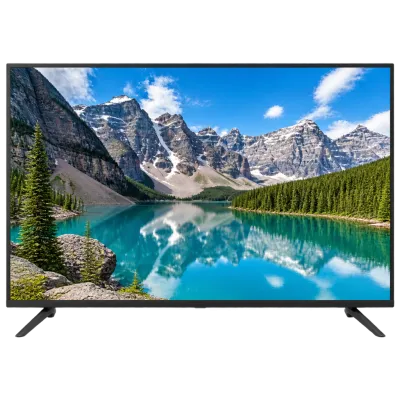 Matching product4K TV 43 inchAmazon →
06
Projectors, briefly
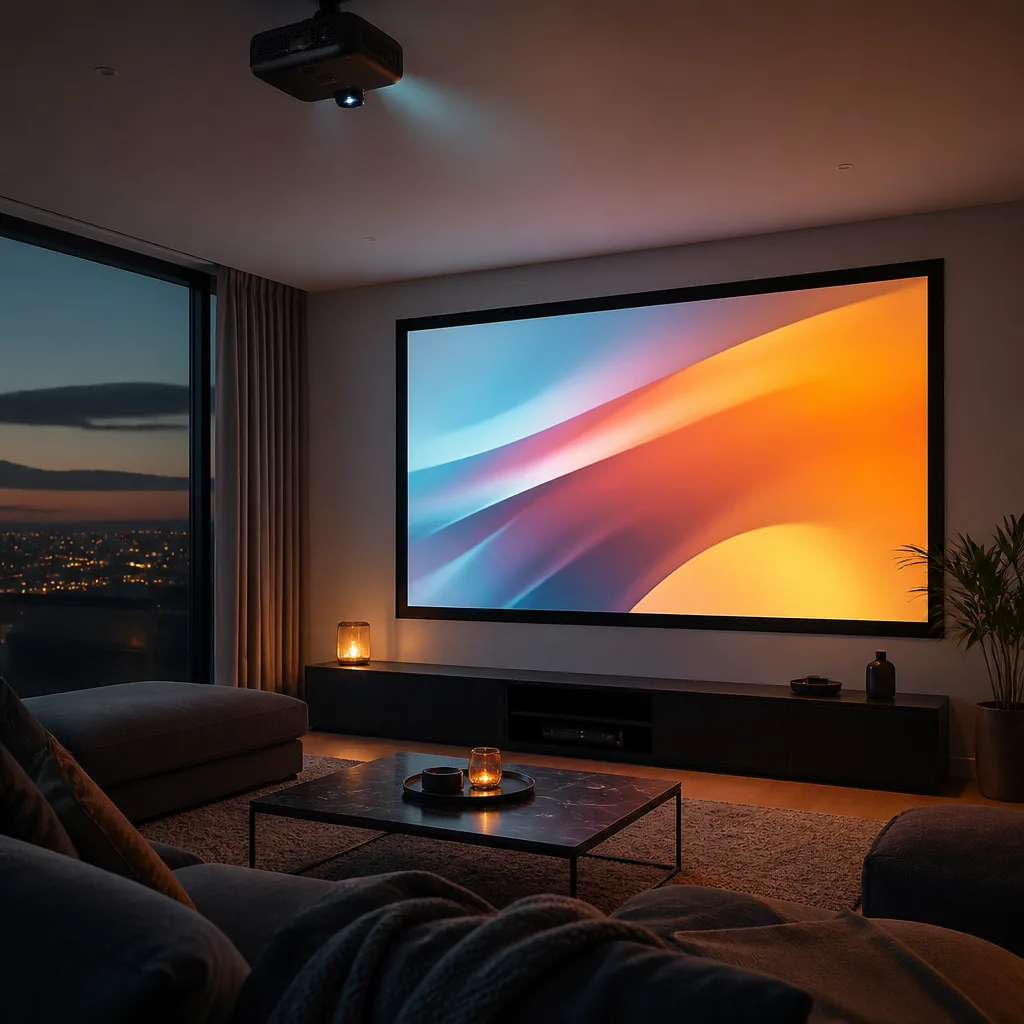
A projector works differently again, throwing an image onto a separate screen or a wall rather than producing it on a fixed panel. This makes very large images possible without a correspondingly large, heavy panel, and lets the image size be adjusted by moving the projector or the screen. Projectors generally need a darker room than a television to look their best, since projected light is easier for ambient room light to wash out, though models aimed at brighter rooms do exist. Our projector versus TV guide covers this comparison in more depth.
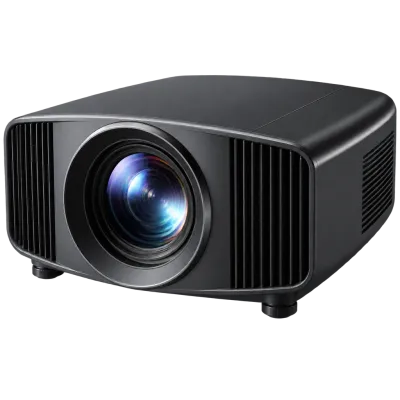 Matching product4K projectorAmazon →
07
Comparing panel types at a glance
| Panel type | Blacks | Brightness | Viewing angle | Burn-in risk | Price class |
|---|---|---|---|---|---|
| LCD, edge-lit | Grey rather than true black | Moderate | Narrower, colours shift off axis | None | Entry level |
| LCD, full-array Mini-LED | Deep in most scenes, some halo around bright spots | High | Narrower, colours shift off axis | None | Mid-range to premium |
| QLED (LCD with quantum dots) | Depends on the underlying backlight | High | Narrower, colours shift off axis | None | Mid-range to premium |
| WRGB OLED | Per-pixel, essentially true black | Moderate to high | Very wide, stable colour off axis | Reduced but not zero | Premium |
| QD-OLED | Per-pixel, essentially true black | High | Very wide, stable colour off axis | Reduced but not zero | Premium |
| Micro-LED | Per-pixel, essentially true black | Very high | Very wide, stable colour off axis | None | Very high end |
| Projector | Depends heavily on room darkness | Lower than a comparable screen in bright rooms | Very wide | None | Entry level to high end |
08
Frequently asked questions
Is OLED always better than QLED?
Not always. OLED generally offers deeper blacks and a wider viewing angle, which suits darker rooms and off centre seating well. A full-array Mini-LED or QLED television can reach higher overall brightness, which can be an advantage in a room with a lot of ambient light. Our OLED versus QLED guide compares the two in more detail.
What causes burn-in and how big a risk is it today?
Burn-in happens when the same static image, such as a logo or a menu bar, stays on an OLED screen for very long, repeated periods, causing those pixels to age faster than their neighbours. Modern OLED panels include measures such as pixel shifting and brightness limiting for static content that reduce this risk considerably compared with early OLED models, though normal, varied viewing carries very little risk in practice. See our glossary entry on burn-in for more.
Is Mini-LED the same thing as OLED?
No. Mini-LED describes a backlight made of many small LEDs behind a conventional LCD panel, while OLED describes a panel where each pixel produces its own light directly. Both aim to improve on older LCD designs, but they work on different principles.
Do projectors work well in daylight?
Most projectors look their best with reduced ambient light, since projected images are more easily washed out than light coming directly from a screen. Some projectors are designed with higher brightness for use in rooms with some daylight, but a fully bright room remains a challenge for almost any projector.
What is the practical difference between WRGB OLED and QD-OLED?
Both are self-emissive OLED panels with per-pixel dimming and similar viewing angle advantages. WRGB OLED adds a white subpixel to boost brightness, while QD-OLED uses a quantum dot layer in front of a blue OLED layer to generate colour. The two approaches lead to some differences in colour volume and peak brightness, without changing the fundamental strengths OLED offers over LCD based panels.
Explore
Read next
 TV Buying Guide: How to Choose the Right TelevisionA practical, step by step guide that walks you through every decision in buying a television, from screen size to sound.
 TV Size Guide: Screen Sizes and Viewing DistanceA practical guide to translating screen diagonal into real dimensions and choosing the right size for your viewing distance and room.
 TV Glossary: Terms Explained from A to ZA quick reference glossary of TV terms from A to Z, from panel types and HDR to connections, sound and reception.