
5 min read
Projector versus TV: which suits your room?
A projector can deliver a far bigger picture than any television, but it asks more of your room in return. Here is how the two compare.
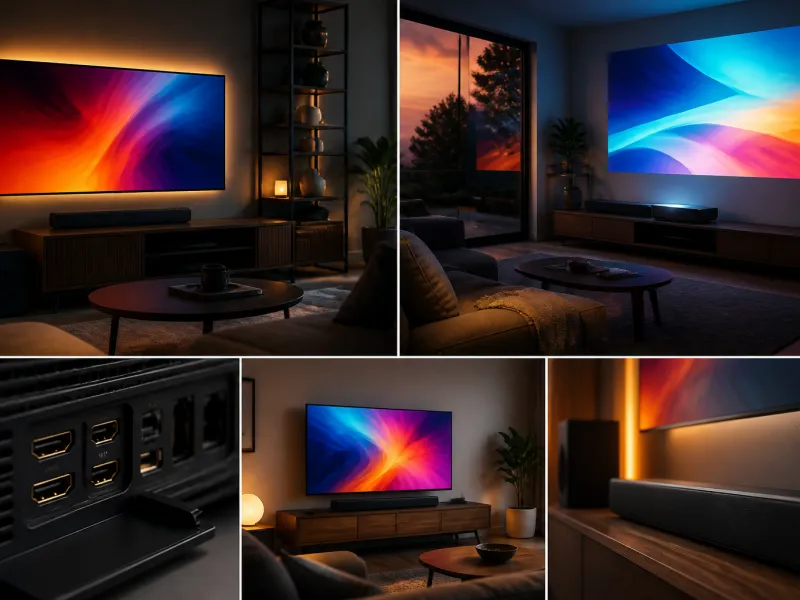
A projector and a television are both ways of watching the same content, but they ask very different things of the room they are used in, and they suit different habits and spaces. This guide compares the two across the factors that matter most in practice, without recommending a particular product or brand.
01
Brightness and ambient light
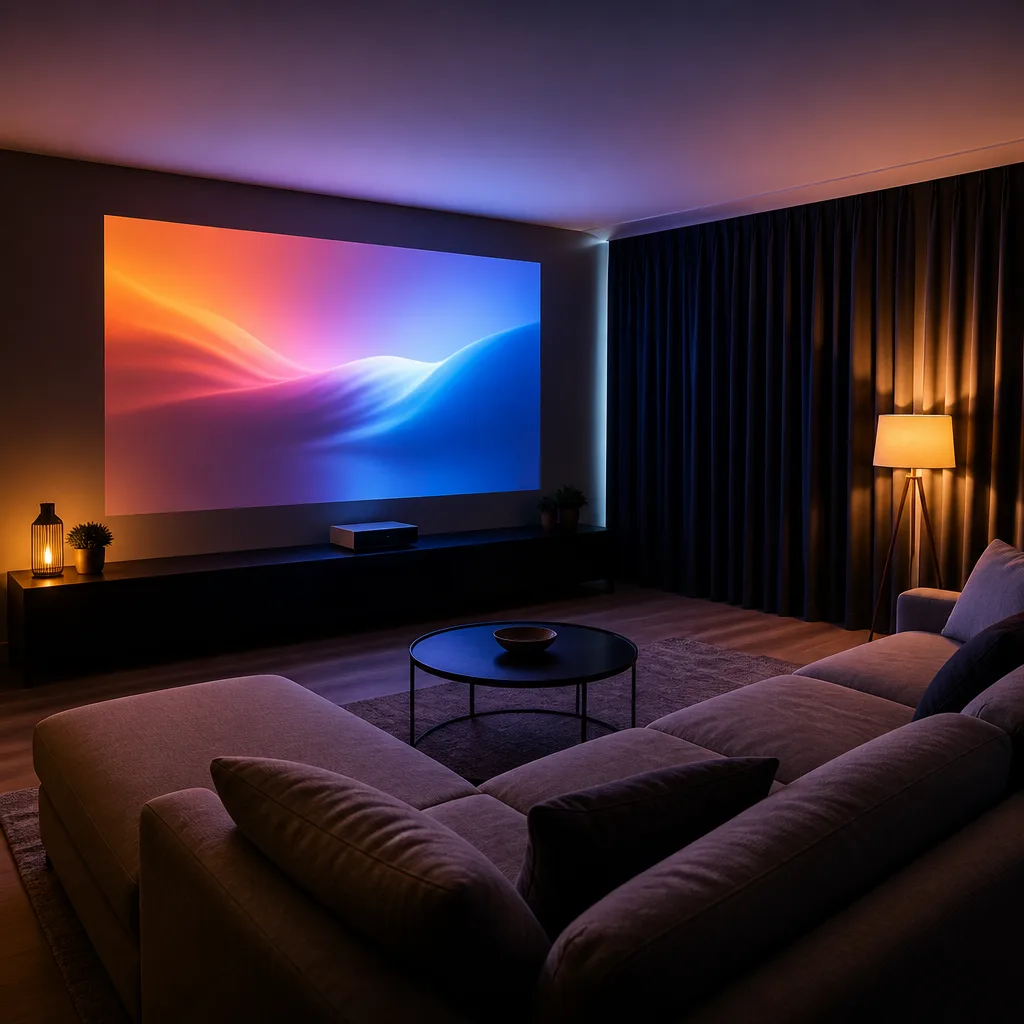
Projector brightness is measured in lumens, and it needs to be matched to the amount of ambient light in the room and the size of the projected image. A modest lumen output can look excellent in a fully darkened room but wash out considerably under normal daytime lighting or with curtains open in the evening. A brighter projector copes better with some ambient light but at a certain point, no realistic lumen output fully overcomes strong daylight in the way a television, particularly a bright one, can.
A television produces its own light directly at the screen and is designed to remain watchable across a wide range of room lighting, from a bright daytime living room to a darkened evening. This is the single biggest practical difference between the two: a projector generally wants a room that can be made properly dark, at least for the best result, while a television is far more flexible about ambient light.
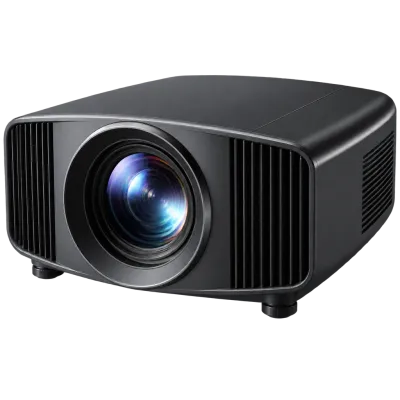 Matching product4K projectorAmazon →
02
Screen size and viewing distance
| Factor | Television | Projector |
|---|---|---|
| Typical maximum size | Limited by what is practical to mount and transport, generally up to around 100 inches for consumer models | Can easily exceed 100 or even 150 inches with the right screen and throw distance, at comparatively low incremental cost for the larger image |
| Image size flexibility | Fixed once installed, determined by the panel itself | Adjustable by moving the projector or changing lens settings, within the room's available throw distance |
| Best suited room | Any room, any lighting condition | A room that can be darkened, with enough depth for the desired throw distance |
For genuinely large screen sizes, a projector is usually the more practical and proportionate option, since a very large flat panel television becomes considerably heavier, harder to transport and install, and generally more costly per additional inch of screen than a projector and screen of equivalent size.
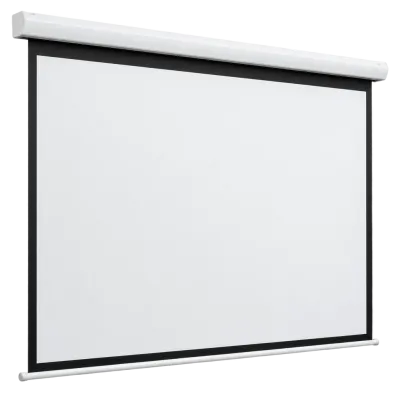 Matching productProjector screenAmazon →
03
Throw distance and installation
A projector needs a certain distance between the lens and the screen to produce a given image size, known as the throw distance, which varies by model and lens type. A standard throw projector needs a reasonably deep room, typically mounted on the ceiling or a shelf towards the back, while short throw and ultra short throw projectors can produce a large image from very close to the screen, suiting rooms where a long throw distance is not available, at the cost of being more sensitive to precise alignment and screen placement.
A television, by contrast, needs only wall or stand space roughly equal to its own footprint, with no dependency on room depth, which makes installation considerably simpler and more predictable across different room shapes. See our guide to wall mounting a TV for installation basics, and our TV size guide for choosing a screen size relative to seating distance.
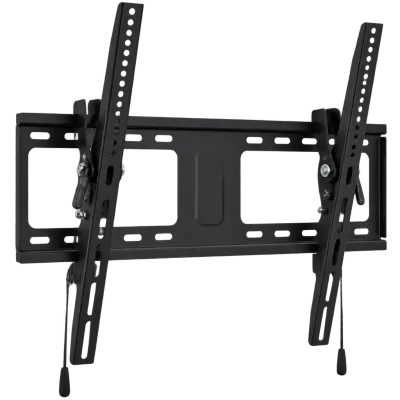 Matching productTilting wall mountAmazon →
04
Lamp versus laser light sources
Projectors use one of several light source technologies. Traditional lamp based projectors use a replaceable bulb that gradually dims with use and eventually needs replacing, an ongoing cost and maintenance task not present with a television. Laser and LED based light sources, increasingly common in newer projectors, are rated for a much longer operating life before any noticeable dimming, generally reducing or eliminating the need for a separate bulb replacement over the practical lifetime of the device.
This distinction matters for anyone planning heavy or long term use, such as a dedicated home cinema room used regularly, where a lamp based projector's bulb life and eventual replacement become a real factor in the total picture, in contrast to a television which has no equivalent consumable part.
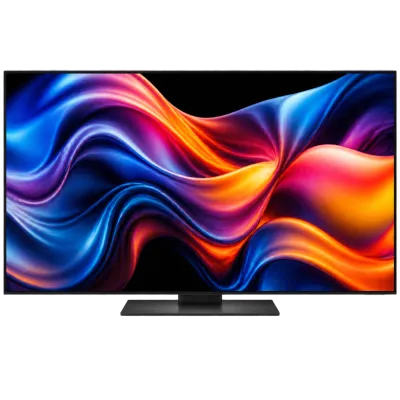 Matching productOLED TV 65 inchAmazon →
05
Sound
Projectors generally do not include sound systems capable of filling a room on their own, so a separate audio setup, whether a soundbar, a full surround sound system or an AV receiver with dedicated speakers, is typically part of a projector based setup from the outset. Many televisions include reasonably capable built in speakers for casual viewing, though a dedicated soundbar or receiver based system still improves on built in TV speakers considerably, particularly for film and immersive formats such as Dolby Atmos. See our sound and streaming overview for how these pieces fit together.
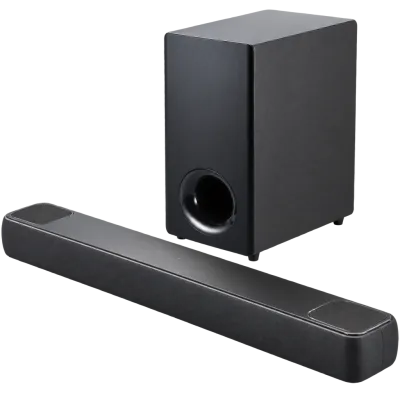 Matching productDolby Atmos soundbarAmazon →
06
Long term cost of ownership
Without referring to specific prices, it is worth thinking about total cost of ownership rather than the upfront purchase alone. A lamp based projector carries a recurring cost for replacement bulbs over its lifetime, which a television and a laser or LED based projector do not. A projector setup often also requires a separate screen and, in most cases, a dedicated sound system from the start, adding to the initial setup compared with a television, which typically arrives as a complete, self contained unit including a screen and basic sound.
On the other hand, for a genuinely large image, a projector and screen combination is usually considerably more cost effective per inch of picture size than an equivalently large flat panel television, so the more sensible choice depends heavily on the target screen size and how the room will be used.
Maintenance is another part of the picture. A projector's lens and internal optics benefit from occasional dust removal and, depending on the model and installation, periodic filter cleaning, tasks that a sealed flat panel television does not require. A ceiling mounted projector also involves a small amount of extra effort for access when maintenance is needed, compared with a wall mounted or stand based television at normal height.
07
Which suits your room
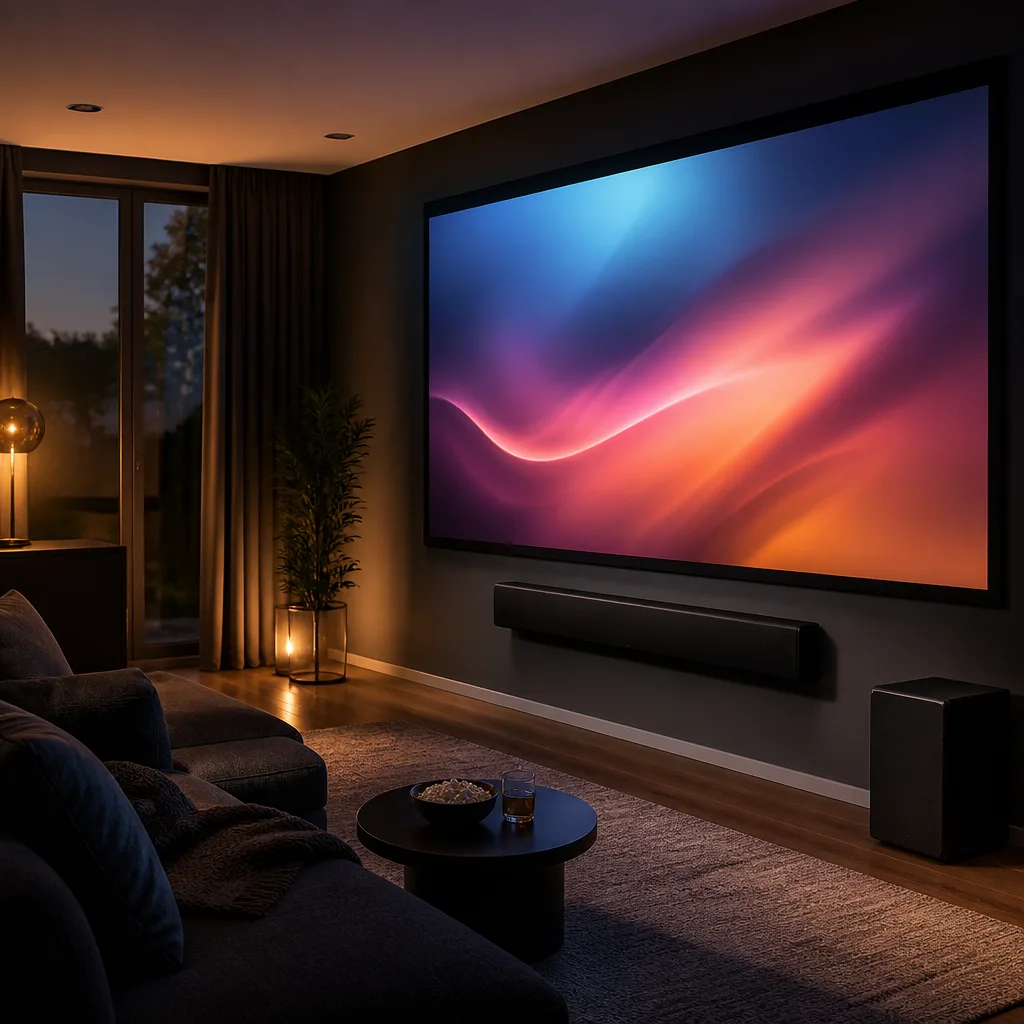
A television generally suits a room used at different times of day, with variable lighting, and where a large but not extreme screen size is wanted with minimal setup. A projector generally suits a room that can be dedicated, at least during viewing, to a darker environment, where a very large image is the priority and some additional setup for a screen and sound system is acceptable. Some households use both: a television for everyday, flexible viewing, and a projector for occasional larger scale film nights in a room that can be darkened for the occasion.
08
Frequently asked questions
Can a projector work well in a bright room?
Only to a limited extent. Higher brightness projectors cope better with some ambient light, but image contrast and colour still suffer noticeably compared with a fully darkened room, more so than with a television.
Do projectors need a special screen?
A dedicated projector screen generally gives a better result than projecting onto a plain wall, with more even brightness and accurate colour, though a smooth, light coloured wall can work as a starting point.
Are laser projectors always better than lamp based ones?
Laser and LED light sources typically offer a much longer service life before dimming and usually avoid the need for bulb replacement, which suits heavy use, though lamp based projectors remain a viable and often simpler option for lighter, occasional use.
Is a projector a good choice for daytime television watching?
Generally not the best choice. A television handles a bright room far more comfortably, and a projector is better suited to evening or darkened room viewing.
 Matching productQLED TV 55 inchAmazon →
Explore
Read next
 TV Panel Types Explained: LCD, QLED, Mini-LED, OLED and MoreAn overview of TV panel technologies, from LCD and QLED to OLED and Micro-LED, compared on blacks, brightness, viewing angle and burn-in ri…
 TV Buying Guide: How to Choose the Right TelevisionA practical, step by step guide that walks you through every decision in buying a television, from screen size to sound.
 TV Size Guide: Screen Sizes and Viewing DistanceA practical guide to translating screen diagonal into real dimensions and choosing the right size for your viewing distance and room.