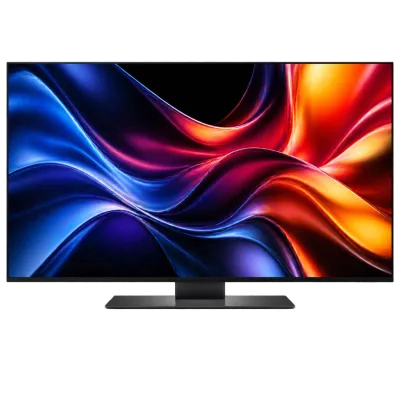
OLED stands for organic light emitting diode. Instead of shining a backlight through a layer of liquid crystal, each pixel on an OLED panel produces its own light and can switch off completely. That per pixel control is what gives OLED screens their reputation for very deep black levels and sharp contrast between light and dark areas of an image.
In everyday use, this makes OLED especially strong in darkened rooms, for films and for content with a lot of dark scenes, since there is no backlight glow around bright objects on a dark background. Viewing angles are also wide, so the picture looks consistent from the side as well as from directly in front. Peak brightness in very bright rooms is generally lower than on the best backlit LCD sets, and manufacturers have reduced the risk of burn-in from static images over the years, though it has not been eliminated entirely.
Because of these strengths and trade-offs, OLED is one of two technologies that dominate the upper end of the television market today. Our OLED versus QLED comparison looks at how it stacks up against the alternative, and the TV types overview explains where each technology fits.