
6 min read
OLED vs QLED: which TV technology should you choose
OLED and QLED are the two technologies behind most modern televisions. Here is how each one produces its picture, and which strengths matter for your room.
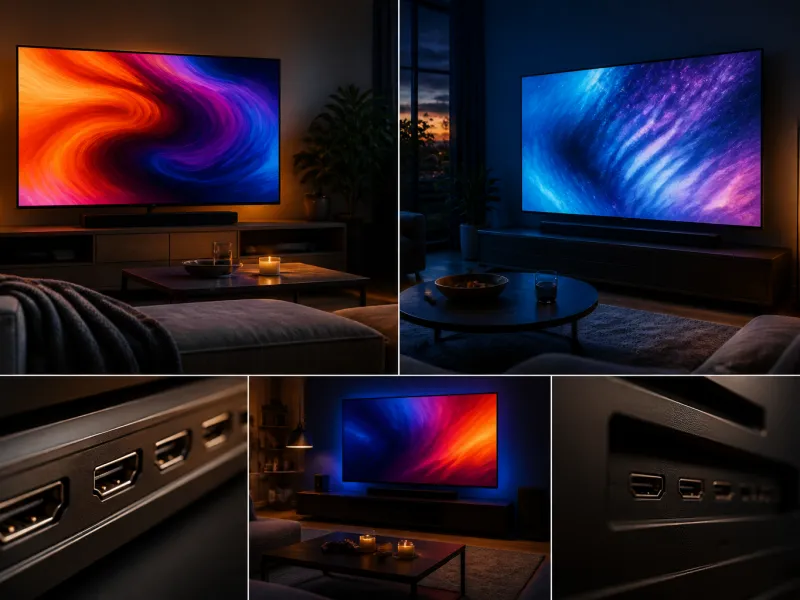
When you start shopping for a new television, you will quickly run into two names that sound similar but describe very different technology: OLED and QLED. Both promise a sharp, colourful picture, and both appear across a wide range of screen sizes and budgets, so the letters alone do not tell you much.
This guide explains how each technology creates an image, then compares them on the points that actually affect what you see at home: black levels, brightness, colour, viewing angle, the risk of burn-in and expected lifespan. At the end you will find guidance on which technology tends to suit which room.
01
How OLED works
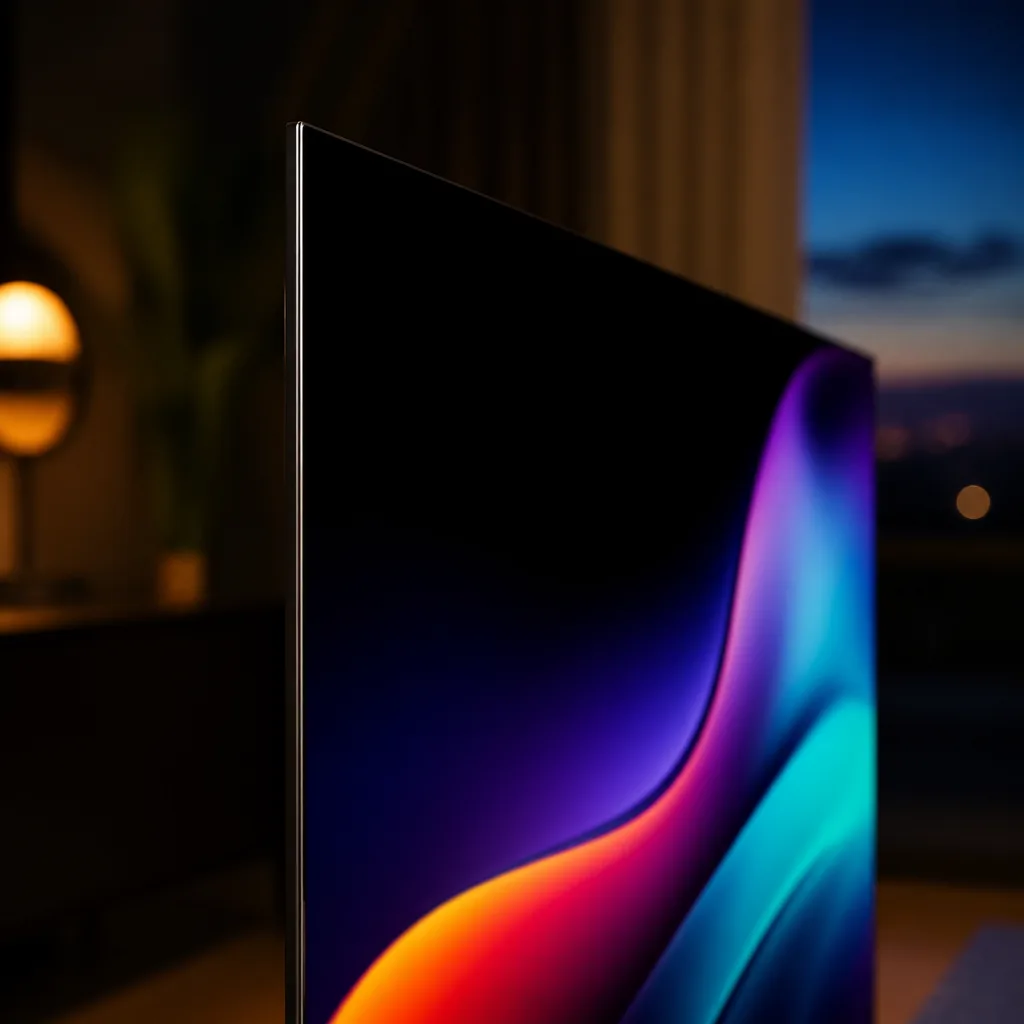
OLED stands for organic light emitting diode. In an OLED television, every single pixel produces its own light. There is no separate backlight sitting behind the screen, unlike almost every other television type. When a pixel needs to show black, it simply switches off and emits no light at all.
This per-pixel control is the source of OLED's most famous strength: it can place a fully lit pixel directly next to a completely dark one with no glow or halo between them. The panels are also very thin, since there is no backlight layer to accommodate, which is why OLED televisions are often praised for their slim, almost weightless design.
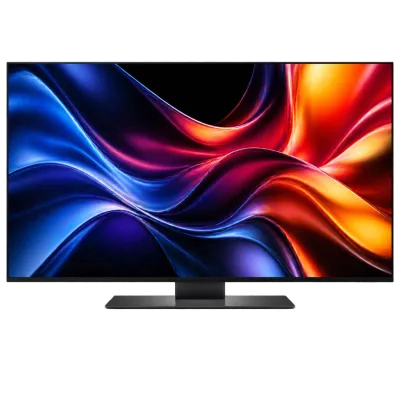 Matching productOLED TV 55 inchAmazon →
02
How QLED works
QLED is a marketing name for an LCD television with an added layer of quantum dots. Despite the similar sounding name, QLED is built on fundamentally different technology to OLED. A QLED screen still relies on a backlight, typically an array of LED lights sitting behind the liquid crystal layer, and the quantum dot film sits between the backlight and the pixels to convert the light into purer, more saturated colours.
Because the light source is separate from the pixels, an LCD panel needs to block light with its liquid crystal layer to create dark areas. Even a very good LCD television cannot make pixels fully dark the way OLED can, since some backlight always leaks through. Manufacturers address this with local dimming, where the backlight is split into zones that can dim independently, a technique explained further in our guide to full array local dimming. A backlight with many small zones is often called Mini-LED, and it narrows the gap to OLED considerably, though it does not fully close it.
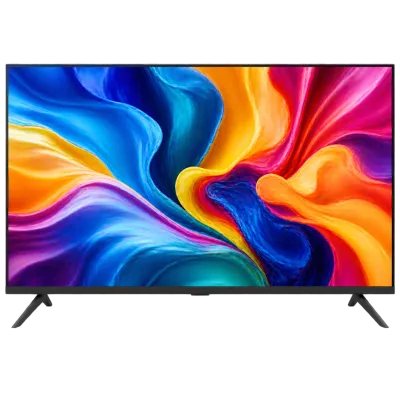 Matching productQLED TV 55 inchAmazon →
03
Black levels and contrast
This is where the two technologies diverge most clearly. Because OLED pixels switch off completely, an OLED screen can show a bright star against a fully black night sky with no visible glow around it. This gives OLED televisions an extremely high contrast ratio, a topic covered in more detail in our contrast ratio glossary entry.
QLED and other LCD based televisions rely on local dimming to approximate this. In scenes with a lot of contrast between light and dark areas in the same part of the screen, some blooming or glow can appear around bright objects, particularly on models with fewer dimming zones. High end Mini-LED models with many zones reduce this effect substantially, but in dark room viewing, OLED still tends to have the edge for pure black levels.
 Matching productMini-LED TV 65 inchAmazon →
04
Brightness and use in bright rooms
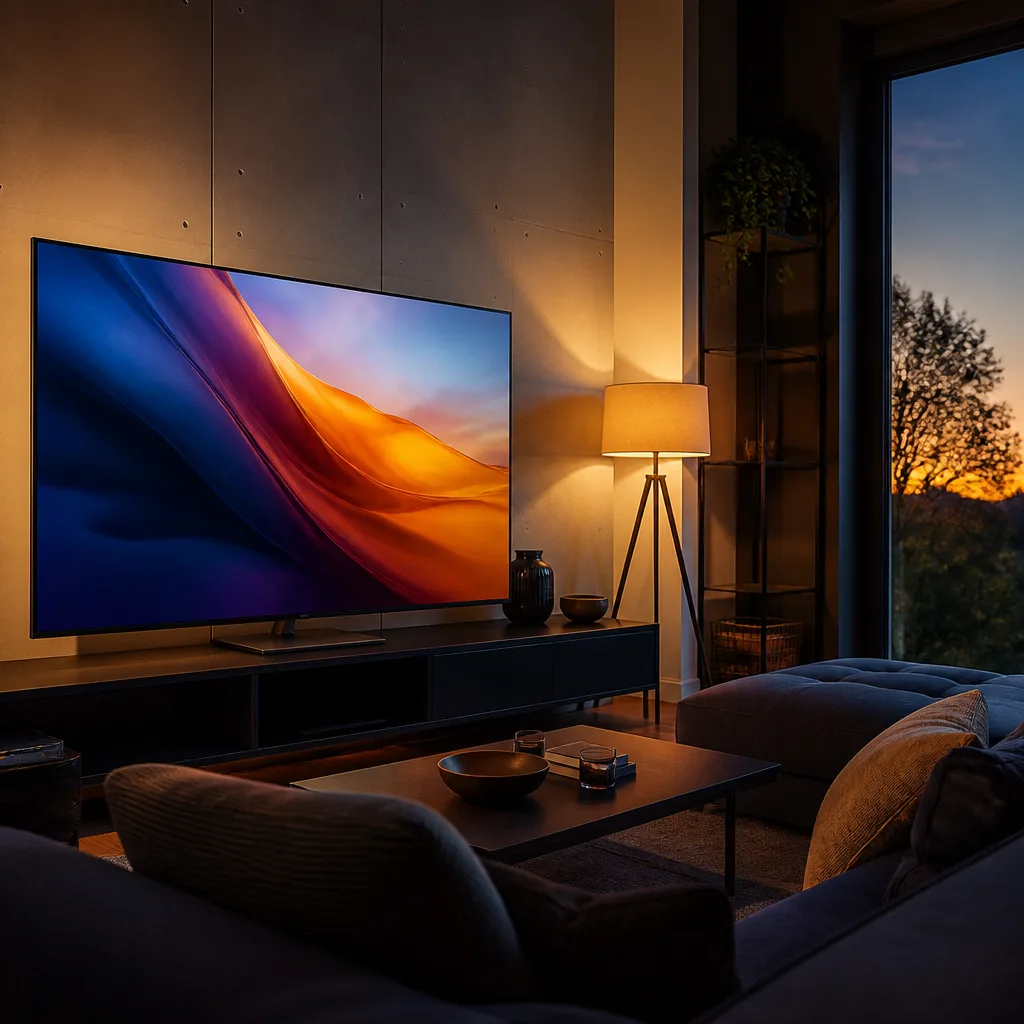
Brightness is where QLED and other LCD technologies traditionally have an advantage. Because the backlight is a separate, dedicated light source, LCD based televisions, including QLED and Mini-LED models, can often reach a higher sustained peak brightness across a large part of the screen. This matters most in rooms with a lot of ambient daylight, where a brighter panel is easier to see clearly.
Modern OLED panels have closed much of this gap, especially the newer generations that combine the organic material with additional brightness boosting layers. Even so, if your main viewing room has large uncovered windows and you tend to watch during the day, a brighter panel is usually the more comfortable choice. Our guide on televisions for bright rooms looks at this in more detail.
05
Colour and viewing angle
Both technologies can produce excellent, wide ranging colour on well specified models. OLED's per-pixel light control tends to give colours a very consistent look regardless of how bright or dark the scene is, since there is no backlight bleeding into darker tones. QLED panels benefit from the purity that quantum dots add to the colour spectrum, which can produce very vivid, saturated colours, particularly at higher brightness levels.
Viewing angle is a more clear cut difference. OLED panels tend to maintain their colour and contrast well when viewed from the side, which suits households where people often sit off to one side of the room, such as around a large sofa or dining table. Standard LCD panels, including many QLED models, can lose contrast and shift in colour more noticeably off axis, although some manufacturers offer wide viewing angle coatings or panel designs that reduce this effect.
06
Burn-in and long term durability
Burn-in is a permanent change in an OLED panel's brightness caused by displaying the same static image, such as a news channel logo or a video game heads up display, for very long, repeated periods. It happens because the organic material ages slightly with use, and uneven use across the screen can eventually show up as a faint, fixed image.
Modern OLED televisions include several features to reduce this risk, such as pixel shifting, screen savers that activate during long static images, and automatic brightness limiting. For typical, varied viewing such as streaming shows, films and sport, burn-in risk today is low. It becomes more relevant for uses with a lot of fixed on screen elements, such as leaving a news ticker on for many hours a day, every day, over several years.
QLED and other LCD technologies do not use organic light emitting pixels, so they are not subject to this specific type of burn-in. LCD panels have their own long term wear factors, mainly a gradual dimming of the backlight over many years of use, which affects all LCD based screens to some degree.
 Matching productProjector screenAmazon →
07
Comparing OLED and QLED at a glance
| Aspect | OLED | QLED |
|---|---|---|
| Light source | Each pixel emits its own light | LED backlight with a quantum dot layer |
| Black levels | Pixels switch off fully | Approximated with local dimming |
| Peak brightness | Strong, improving each generation | Typically higher sustained brightness |
| Viewing angle | Very consistent off axis | Can narrow on standard panels |
| Burn-in risk | Low with normal use, reduced by mitigation features | Not applicable in the same way |
| Panel thickness | Very thin, no backlight layer | Slightly thicker due to backlight |
08
Which technology suits which room
For a dark or dimly lit living room used mainly for films and evening viewing, OLED's deep blacks and wide viewing angle often give the most immersive result, especially for a main sofa positioned off centre from the screen. For a bright kitchen, sunroom or a room with large windows and little control over daylight, the higher sustained brightness of a QLED or Mini-LED model tends to be more comfortable to watch.
Households that mix a lot of static content, for example a television left on a news channel or a computer display connected to it for long stretches every day, may prefer to weigh the small extra caution that OLED needs around static images. For general mixed use, streaming, broadcast television, sport and occasional gaming, either technology performs well, and the choice often comes down to room lighting and the specific model's other features, such as its refresh rate and gaming features or connections. Our buying guide walks through the full decision process, including size and platform choices.
 Matching product120 Hz gaming TVAmazon →
09
Frequently asked questions
Is OLED always better than QLED
No. OLED tends to lead on black levels and viewing angle, while QLED and other LCD based technologies often lead on sustained peak brightness. Which is better depends on your room and how you watch.
Does QLED have the same burn-in risk as OLED
No. QLED is an LCD technology with a separate backlight, so it is not subject to the organic pixel aging that causes OLED burn-in. LCD panels have their own separate long term wear characteristics instead.
Can a QLED television match OLED's black levels
A QLED television with many local dimming zones, often marketed as Mini-LED, can come close in many scenes, but it approximates dark areas with a dimmed backlight rather than switching pixels off completely, so very bright objects on a fully black background can still show some glow.
Is QD-OLED a third technology
QD-OLED combines OLED's per-pixel light emission with a quantum dot colour layer, so it is a variant of OLED rather than a separate category. See our QD-OLED glossary entry for details.
Explore
Read next
 TV Panel Types Explained: LCD, QLED, Mini-LED, OLED and MoreAn overview of TV panel technologies, from LCD and QLED to OLED and Micro-LED, compared on blacks, brightness, viewing angle and burn-in ri…
 TV Buying Guide: How to Choose the Right TelevisionA practical, step by step guide that walks you through every decision in buying a television, from screen size to sound.
 TV Size Guide: Screen Sizes and Viewing DistanceA practical guide to translating screen diagonal into real dimensions and choosing the right size for your viewing distance and room.