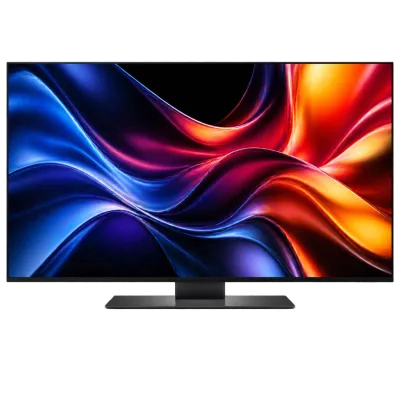
WRGB OLED is the panel design used in most large OLED televisions. Alongside the usual red, green and blue sub pixels, each pixel also includes a white sub pixel. The white element mainly boosts overall brightness, while colour filters placed in front of the white and coloured elements produce the final image the eye sees.
This approach exists mainly because producing individually coloured OLED sub pixels reliably at large television sizes has been more difficult than producing a uniform white OLED layer with filters on top. WRGB manufacturing is what has made large, affordable OLED televisions from multiple television brands possible, since several manufacturers license OLED panels built this way.
For viewers, the practical result is a self emissive display with the deep blacks and wide viewing angles typical of OLED, with brightness that has improved generation over generation without changing the fundamental WRGB structure. This differs from the alternative QD-OLED approach, which our TV types overview also covers.