
5 min read
TVs for outdoor spaces and bathrooms
A regular television is not designed for humidity, splashes or direct sun. Here is what outdoor and bathroom use actually requires.
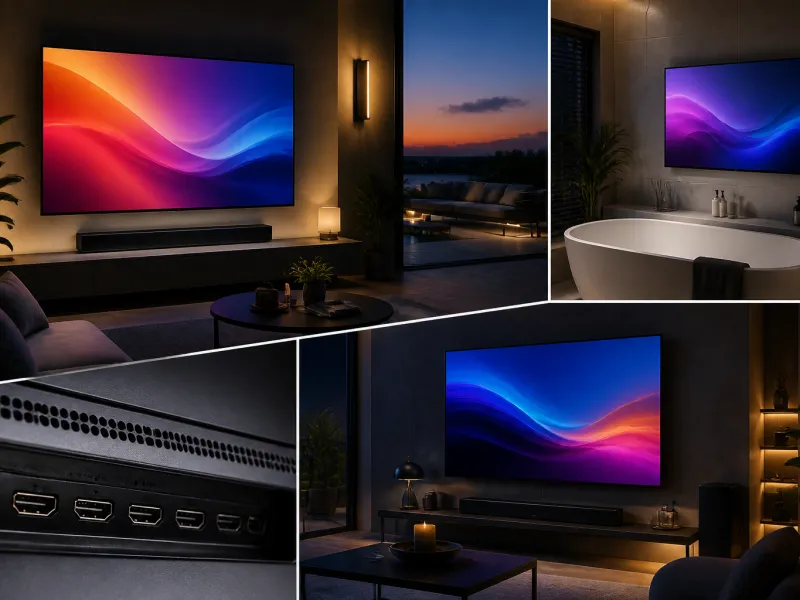
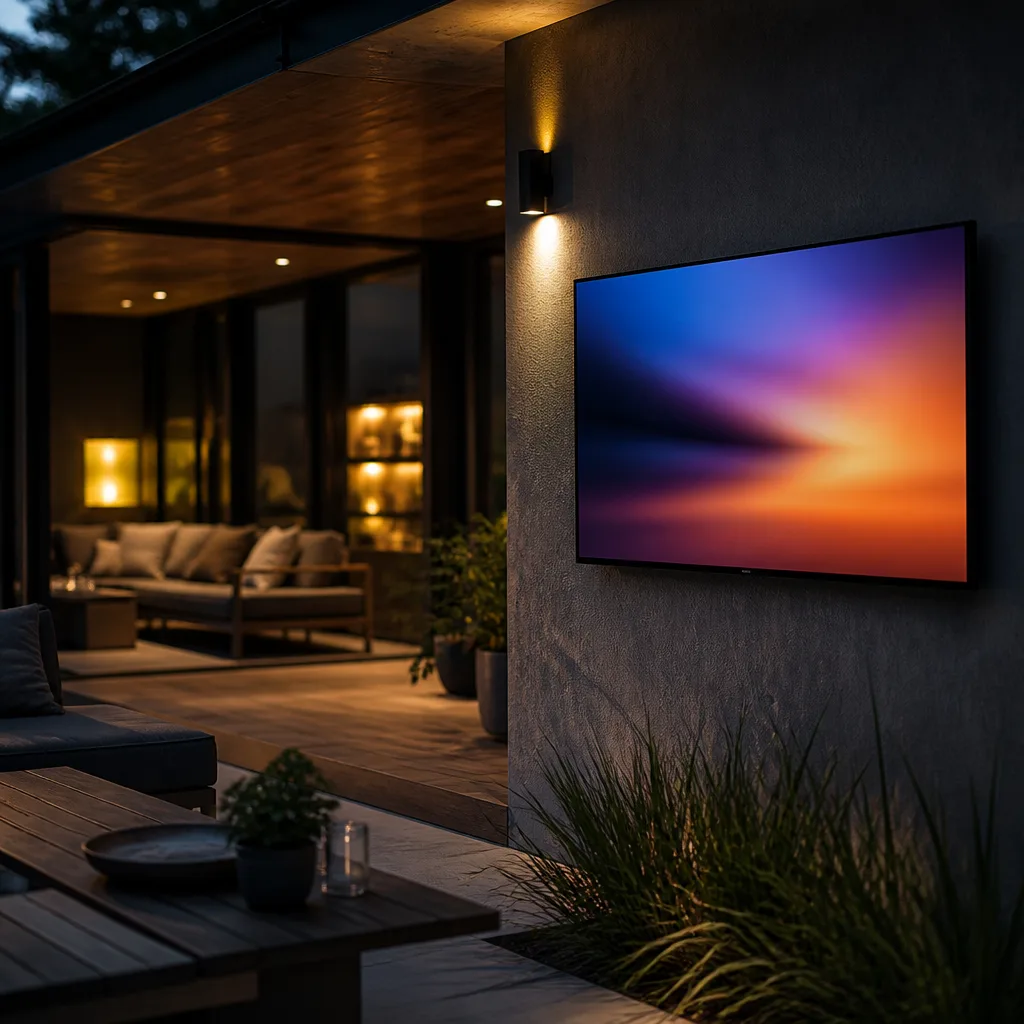
A television mounted on a patio wall, beside a pool, or on a steamy bathroom wall faces conditions that an ordinary living room set is simply not built to handle. Humidity, temperature swings, direct sunlight and the risk of splashing water all shorten the life of standard electronics, sometimes quite quickly.
This guide covers what specifically to look for if you want a television in one of these demanding spaces, and when an alternative approach makes more practical sense.
01
Understanding IP ratings
Protection against dust and water is described using an IP rating, a two digit code where the first digit covers protection against solid particles like dust, and the second covers protection against water. A higher number means stronger protection. For example, IP65 means fully dust tight with protection against low pressure water jets from any direction, which suits an exposed outdoor location. IP44 offers more modest protection against splashing water from any direction, which may be adequate for a sheltered spot or a bathroom, but not for direct exposure to rain.
| IP rating | What it means | Suitable for |
|---|---|---|
| IP44 | Protected against splashing water from any direction | Sheltered outdoor area, or a bathroom away from a direct shower spray |
| IP55 | Dust protected, protected against low pressure water jets | Covered patio or balcony with some weather exposure |
| IP65 | Dust tight, protected against low pressure water jets from any direction | Exposed outdoor location, garden or poolside area |
| IP66 or higher | Dust tight, protected against powerful water jets | Fully exposed outdoor installations, including near a pool edge |
A genuine bathroom or outdoor television will state its IP rating clearly, covering the whole enclosure including any ports and controls, not just the front panel. A standard indoor television has no meaningful IP rating for this purpose and is not designed to tolerate condensation, splashing or humidity over time, even if it survives briefly.
02
Brightness for outdoor viewing
Outdoor televisions intended for daylight use need considerably higher peak brightness than an indoor model, since they compete with direct or reflected sunlight rather than a controlled room. A screen that looks perfectly bright indoors can appear washed out and hard to read outdoors in daylight, particularly with reflections from a glossy surface. Specialised outdoor models use panels built for higher sustained brightness and often an anti-reflective or anti-glare coating designed for this exact situation, which a standard television usually lacks.
03
Operating temperature range
Standard televisions are specified for a fairly narrow indoor temperature range, and both very high and very low temperatures can affect the panel and electronics, from a temporary loss of performance to permanent damage in extreme or prolonged cases. Genuine outdoor televisions are built with a wider operating temperature range and additional heat management, such as ventilation or heating elements for cold climates, to cope with seasonal extremes rather than a stable indoor climate.
This matters particularly in climates with hot summers, since direct sunlight on a mounted screen can push its internal temperature well above the surrounding air temperature, and in cold climates where a screen left outdoors overnight may need to warm up before switching on safely.
 Matching productProjector screenAmazon →
04
Mounting considerations
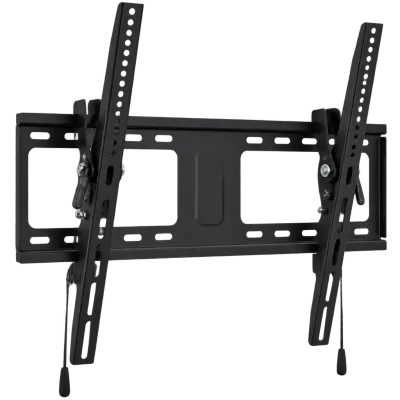
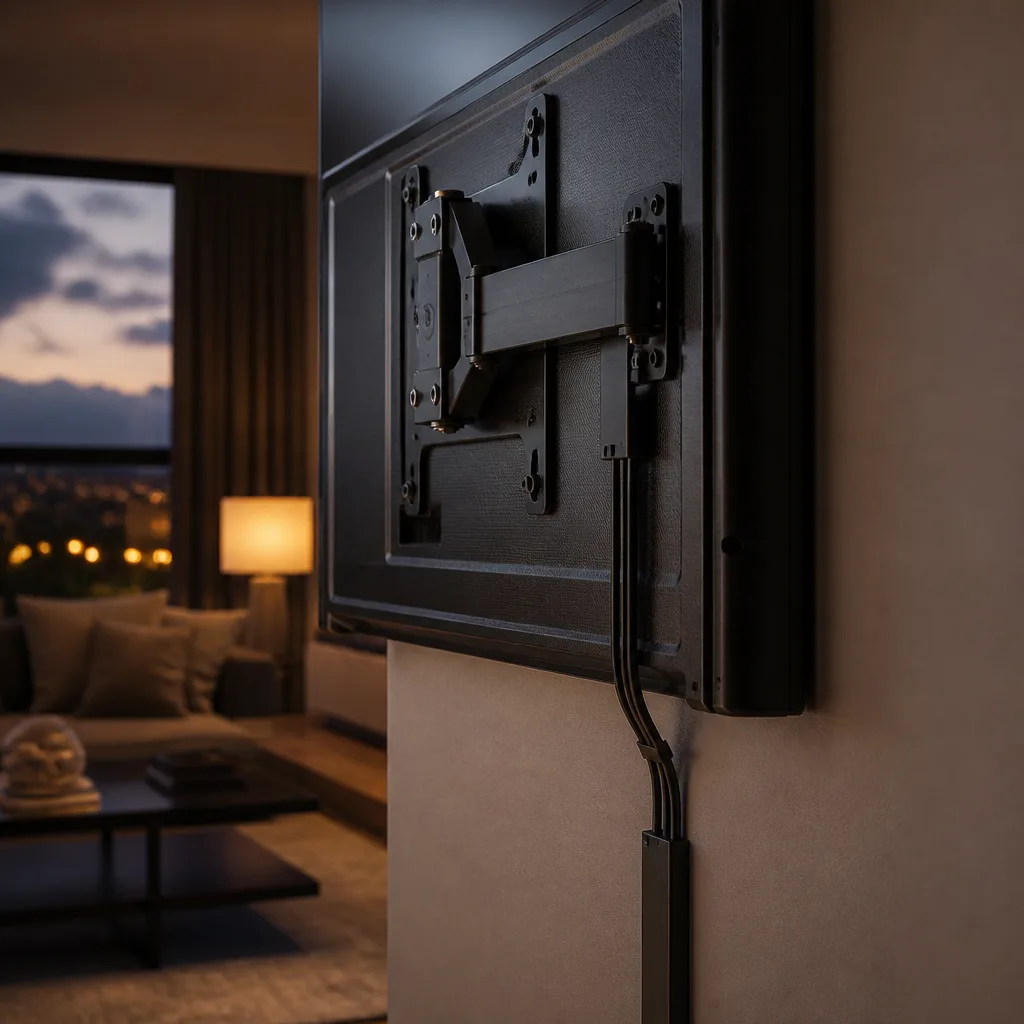
Outdoor and bathroom installations need particular attention to how the television is mounted and how cables are routed. Cable entry points should be sealed and, where possible, cables should enter from below or the side rather than the top, to reduce the chance of water tracking down a cable into the enclosure. A mount rated for outdoor or humid use, and ideally some form of weather cover when the television is not in use, adds further protection. See our general guide to wall mounting a TV for the mounting basics that apply indoors and outdoors alike, including checking the VESA pattern compatibility between mount and screen.
For bathrooms specifically, local electrical safety regulations often define zones around a bath or shower with restrictions on what electrical equipment can be installed at each distance, so it is worth checking local requirements before choosing a location, quite apart from the television's own IP rating.
 Matching productTilting wall mountAmazon →
05
Power supply and cable protection
Beyond the television itself, the power supply arrangement deserves attention in humid or exposed locations. An outdoor rated power outlet with its own weatherproof cover, positioned away from direct water exposure, is generally required, and a residual current device on the relevant circuit adds a meaningful layer of safety around any electrical equipment used near water. Cable runs between the outlet and the television should avoid pooling points and be secured so that wind or routine maintenance cannot pull a connector loose over time. These details are easy to overlook when focused on the television's own rating, but they matter just as much for a safe, long lasting installation.
 Matching productUltra High Speed HDMI cableAmazon →
06
Alternatives to a dedicated outdoor or bathroom TV
A purpose built outdoor or bathroom television is not the only option, and for some spaces it may not be the most practical one. A few alternatives are worth considering:
- A standard indoor television mounted in a genuinely sheltered spot, such as a covered veranda with no direct rain or splash exposure, protected by a purpose made weatherproof enclosure or cabinet designed to hold a regular television safely.
- A portable television brought outside only for specific occasions and stored indoors otherwise, avoiding the need for permanent weatherproofing altogether.
- A projector with a suitable outdoor or portable screen for occasional evening viewing, which avoids permanent installation and associated weatherproofing, though it depends on darkness and is less suited to daytime use. See our comparison in projector versus TV.
 Matching product4K projectorAmazon →
07
Sound and connectivity outdoors
Outdoor spaces also change how sound behaves, since open air and background noise from wind, traffic or garden equipment reduce the effective loudness and clarity of a television's built in speakers. A weatherproof outdoor soundbar or dedicated outdoor speakers, rated with a similar IP standard to the television itself, generally give a more satisfying result than relying on the screen's own audio. See our soundbar guide for background on how soundbars work, keeping in mind that an indoor rated soundbar is not a substitute for a weatherproof outdoor model.
 Matching productDolby Atmos soundbarAmazon →
08
Frequently asked questions
Can I just put a regular TV in a weatherproof cabinet outdoors?
A well designed weatherproof cabinet can protect a standard television from rain and some temperature extremes, though ventilation and heat build up in direct sun still need consideration, and humidity inside a sealed cabinet can still be a problem over time. A purpose built outdoor television handles these issues directly rather than relying on an enclosure.
Is a high IP rating enough on its own?
The IP rating covers dust and water protection, but outdoor use also depends on brightness for daylight viewing and a suitable operating temperature range, so it is worth checking all three rather than the IP rating alone.
Do bathroom TVs need the same rating as outdoor TVs?
Not necessarily as high. A bathroom away from direct shower spray may only need a modest splash protection rating, while a fully exposed outdoor installation, especially near a pool, calls for a considerably higher rating.
Are outdoor televisions much more expensive than indoor ones?
Purpose built outdoor and bathroom televisions involve additional engineering for weatherproofing, brightness and temperature tolerance, which typically places them in a different category from standard indoor models of a similar screen size.
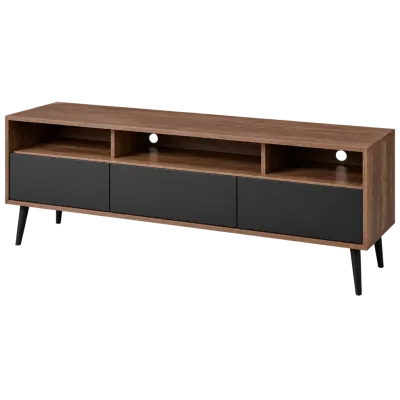 Matching productTV standAmazon →
Explore
Read next
 TV Panel Types Explained: LCD, QLED, Mini-LED, OLED and MoreAn overview of TV panel technologies, from LCD and QLED to OLED and Micro-LED, compared on blacks, brightness, viewing angle and burn-in ri…
 TV Buying Guide: How to Choose the Right TelevisionA practical, step by step guide that walks you through every decision in buying a television, from screen size to sound.
 TV Size Guide: Screen Sizes and Viewing DistanceA practical guide to translating screen diagonal into real dimensions and choosing the right size for your viewing distance and room.