
5 min read
A brief history of television
From spinning discs in the 1920s to today's ultra thin OLED panels, television has gone through several distinct technical eras.
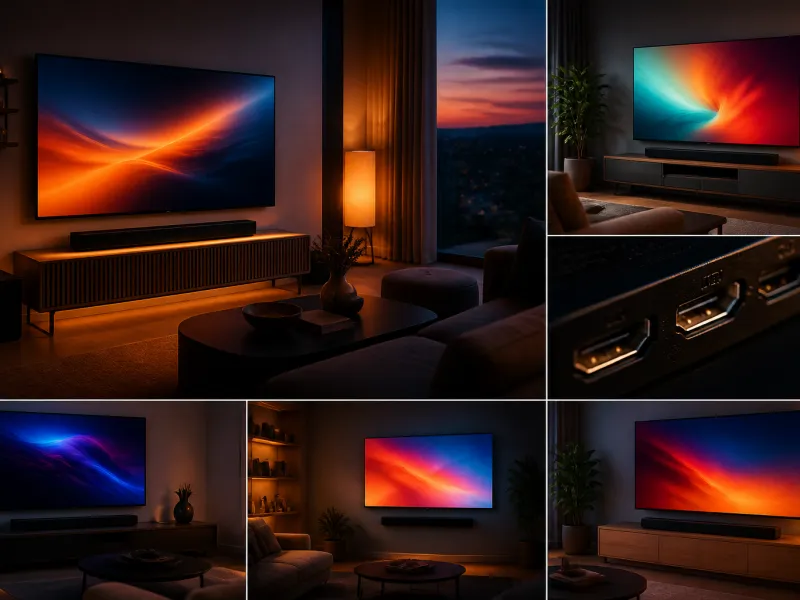
Television as we know it today is the result of roughly a century of incremental invention, spanning mechanical experiments, electronic breakthroughs, decades of colour and format standards, and more recently a shift to flat, high resolution digital displays. This guide traces the broad outline of that development, without claiming to cover every invention or claimant along the way, since the early history of television involved many overlapping efforts across different countries.
01
Early mechanical television
The earliest working television systems, demonstrated during the 1920s, generally used mechanical scanning: a spinning disc with a pattern of holes, developed from earlier work by inventors including Paul Nipkow in Germany in the 1880s, was used to break an image into a sequence of light signals that could be transmitted and then reassembled by a similar spinning disc at the receiving end. These mechanical systems produced low resolution, flickering images, but they proved that moving pictures could be transmitted electrically over a distance, and they were the basis of the first experimental and, in some countries, limited public broadcasts.
Mechanical television had clear practical limits. Image quality was constrained by the physical size and speed of the spinning components, and by the 1930s it was becoming clear that a different approach would be needed for a genuinely practical broadcast television system.
02
The move to electronic television
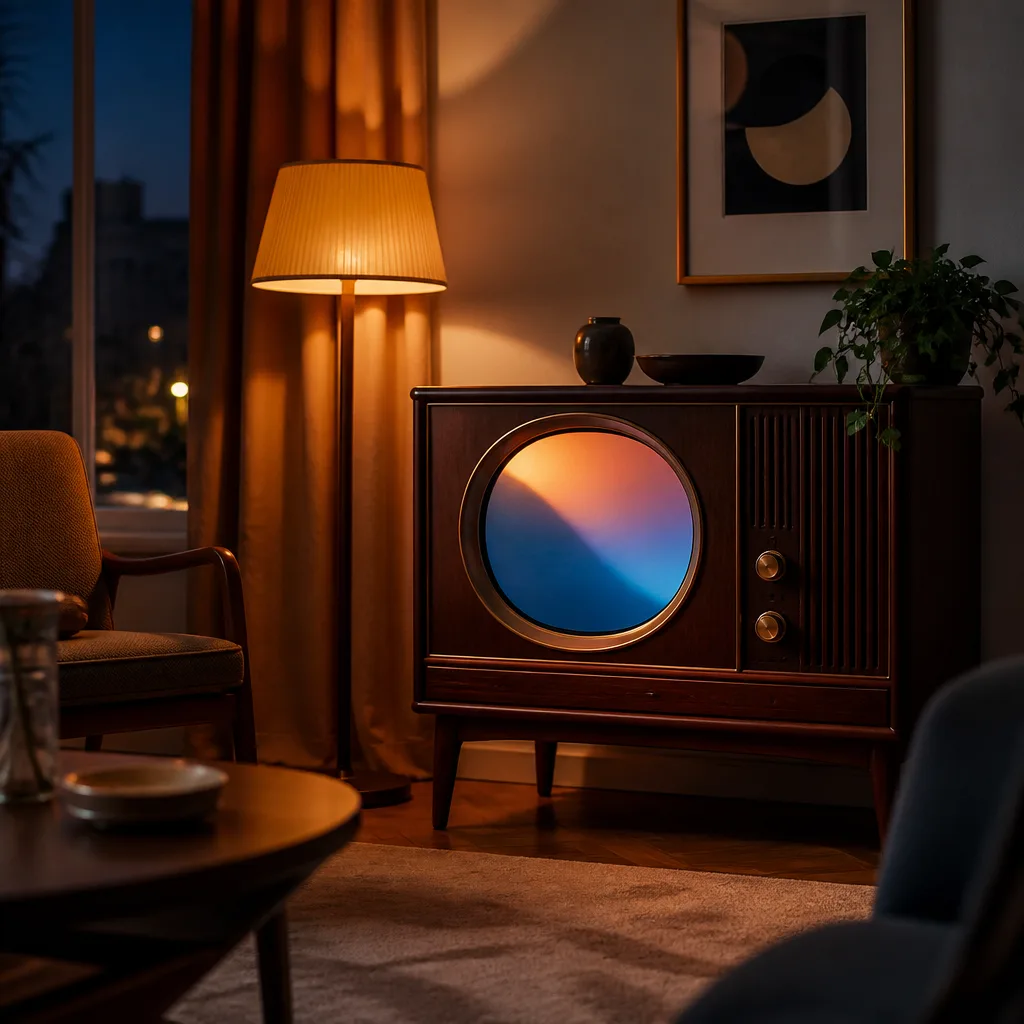
Electronic television replaced mechanical scanning with a cathode ray tube, using a steerable electron beam to scan an image directly, an approach that allowed considerably higher resolution and a more stable, flicker free picture. Development of electronic television involved researchers in several countries during the 1920s and 1930s, and by the second half of the 1930s a number of countries, including the United Kingdom, had begun regular electronic television broadcasts, generally interrupted or delayed in various places by the outbreak of the Second World War.
After the war, electronic television spread rapidly across North America and Europe through the late 1940s and 1950s, becoming a mainstream household item in many countries over that period, with broadcast standards and receiver technology maturing quickly as adoption grew.
03
Colour television arrives
Black and white television remained the norm through the 1940s and much of the 1950s, while various colour systems were developed and tested. In the United States, a colour television standard was adopted commercially during the 1950s, though early adoption was gradual due to the cost of colour receivers and limited colour broadcasting at first. In Europe, colour broadcasting generally arrived somewhat later, from the mid to late 1960s, using different colour encoding standards developed separately from the American one, a divergence that shaped television equipment and compatibility across regions for decades afterwards.
By the 1970s, colour television had become the mainstream standard across most developed television markets, with black and white sets gradually phased out of production as colour receivers became more affordable.
 Matching product4K TV 50 inchAmazon →
04
The remote control
| Period | Development |
|---|---|
| 1950s | Early remote controls introduced, some using a physical cable, others using ultrasonic sound to trigger functions on the receiver |
| 1970s and 1980s | Infrared remote controls became the standard approach, allowing more functions to be added without a physical connection |
| 1980s onward | Remotes expanded to control multiple functions and, later, additional connected devices such as video recorders and, eventually, streaming boxes |
The remote control changed how people used television in a fairly direct way, making channel changing and volume adjustment something done from a chair rather than at the set itself, which in turn influenced viewing habits and, eventually, how broadcasters thought about holding an audience's attention against the ease of switching channels.
05
The shift to flat panels
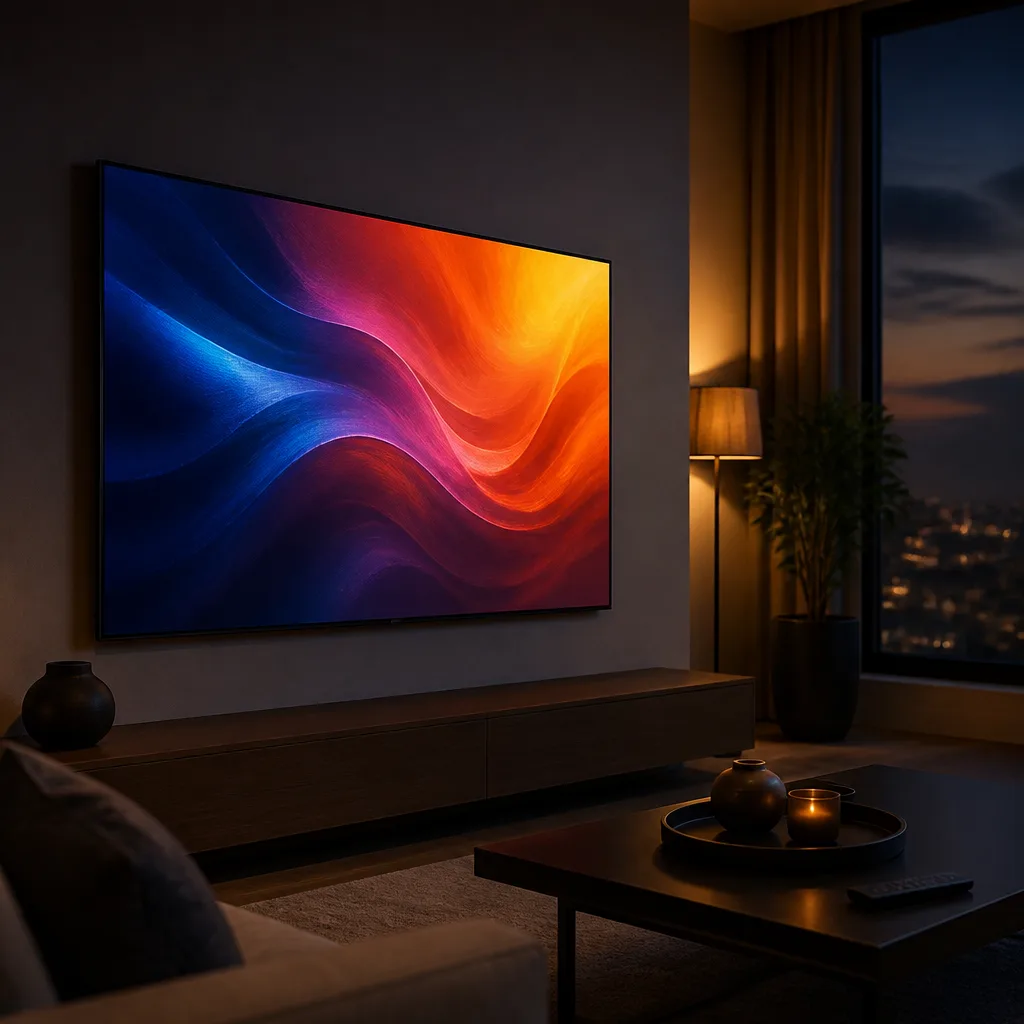
For most of the twentieth century, television sets used a bulky cathode ray tube, which limited how thin and how large a practical set could be. From the late 1990s and through the 2000s, flat panel technologies reached the mass market and gradually replaced cathode ray tube sets almost entirely. Two main flat panel technologies competed during this period: LCD panels, which use a backlight shining through a liquid crystal layer, and plasma panels, which illuminate small gas filled cells directly.
Plasma offered strong contrast and was popular for larger screens during the 2000s and into the early 2010s, but LCD technology improved steadily in contrast, brightness and manufacturing cost, and plasma television production was largely discontinued by the mid 2010s as LCD, and later OLED, took over across nearly all screen sizes.
 Matching productOLED TV 55 inchAmazon →
06
Higher resolution: HD, then 4K
Standard definition broadcasting, with a relatively low pixel count by today's standards, remained the norm into the 2000s in most countries, after which high definition (HD) broadcasting and HD ready and Full HD televisions became mainstream through the 2000s and into the 2010s. From the mid 2010s onward, 4K UHD, with a resolution of 3840 by 2160 pixels, became widely available and increasingly affordable, and has since become the standard resolution for new televisions above entry level sizes, with 8K available at the high end though content and broadcast support for it remain limited.
 Matching productTV standAmazon →
07
OLED and the current generation
OLED television technology, in which each pixel produces its own light rather than relying on a separate backlight, reached the consumer market during the 2010s, offering perfect per pixel black levels and, since then, has become an established premium technology alongside advanced LCD variants such as QLED and Mini-LED backlit screens. Alongside resolution, the past decade has also brought high dynamic range formats, wider colour capability and smart, internet connected features as standard parts of a modern television, a considerable distance from the flickering mechanical discs of the 1920s.
 Matching productQLED TV 55 inchAmazon →
08
From standalone box to connected hub
For most of television's history, the set itself was simply a display and tuner, with separate boxes, from video recorders to game consoles to early set top boxes, handling everything else. Over roughly the past fifteen years, that has changed considerably: a modern television usually includes a built in operating system, internet connectivity and a library of streaming apps as standard, alongside its traditional broadcast tuners. This shift has changed not only how television sets are used, but also how they are designed, with processing power, software updates and app ecosystems now a routine part of buying and using a television, in addition to the picture technology itself. Our guide to smart TV platforms covers this more recent chapter in detail.
 Matching productStreaming boxAmazon →
09
Frequently asked questions
Who invented television?
Television developed gradually through contributions from many inventors and engineers across several countries from the 1880s onward, rather than through a single inventor or a single moment, spanning mechanical and then electronic approaches over multiple decades.
When did colour television become common?
Colour television became commercially available in the United States during the 1950s and in much of Europe from the mid to late 1960s, though widespread household adoption in both regions took longer, extending into the 1970s as receiver prices fell.
Why did plasma televisions disappear?
LCD technology improved in picture quality and became cheaper to manufacture at scale, gradually eroding plasma's advantages, and plasma television production was largely wound down by the mid 2010s.
What replaced the cathode ray tube?
Flat panel technologies, mainly LCD and, for a period, plasma, replaced the cathode ray tube from the late 1990s onward, with OLED emerging later as a further alternative for premium televisions.
Explore
Read next
 TV Panel Types Explained: LCD, QLED, Mini-LED, OLED and MoreAn overview of TV panel technologies, from LCD and QLED to OLED and Micro-LED, compared on blacks, brightness, viewing angle and burn-in ri…
 TV Buying Guide: How to Choose the Right TelevisionA practical, step by step guide that walks you through every decision in buying a television, from screen size to sound.
 TV Size Guide: Screen Sizes and Viewing DistanceA practical guide to translating screen diagonal into real dimensions and choosing the right size for your viewing distance and room.